Hygienic design is not a marketing term. It is an engineering discipline. In the food industry, the construction of a plant determines whether it can be efficiently cleaned or whether, despite daily cleaning, microorganisms survive in dead spots. The European Hygienic Engineering & Design Group (EHEDG) has developed guidelines that serve as the international benchmark.
What is EHEDG?
EHEDG is a foundation based in Frankfurt that has been developing guidelines for hygienic equipment design in the food industry since 1989. The guidelines are not laws but are increasingly referenced in procurement specifications and audits.
In Switzerland, they are particularly relevant for:
- Suppliers to major Swiss retail chains: quality departments increasingly audit installation hygiene
- IFS and BRC certified operations: both standards require demonstrably hygienic design-compliant equipment
- Meat processing plants under cantonal food safety control
The 10 principles of Hygienic Design
1. All surfaces must be cleanable
Every surface in contact with the product or environment must be accessible and effectively cleanable.
2. Smooth surfaces (Ra ≤ 0.8 µm)
Rough surfaces harbour microorganisms. For product-contact surfaces: Ra ≤ 0.8 µm. For non-product-contact surfaces in cleaning zones: Ra ≤ 1.6 µm.
3. No dead spaces
Dead legs are areas where cleaning agents cannot reach during CIP or manual cleaning. They are the most common cause of persistent contamination.
4. Self-draining
All product-contact areas must be able to drain completely. Minimum slope of 1–3° on all horizontal surfaces.
5. No cavities
Closed hollow sections (e.g. square tubes) collect condensation and form microbial reservoirs. Solution: use open profiles or permanently seal hollow sections (welded, not bolted).
6. Minimise seals
Every seal is a potential weak point. Where seals are needed: use FDA/EU-compliant elastomers (EPDM, VMQ, FKM) and replace regularly.
7. Hygienic fasteners
- No slotted screws (dirt traps in the slot)
- Welded joints instead of bolted connections where possible
- Where screws are needed: hex socket, flush-mounted, stainless steel A4
8. Material compatibility
All materials must be resistant to both the cleaning agents AND the processed food product.
9. Separation of product and technical zones
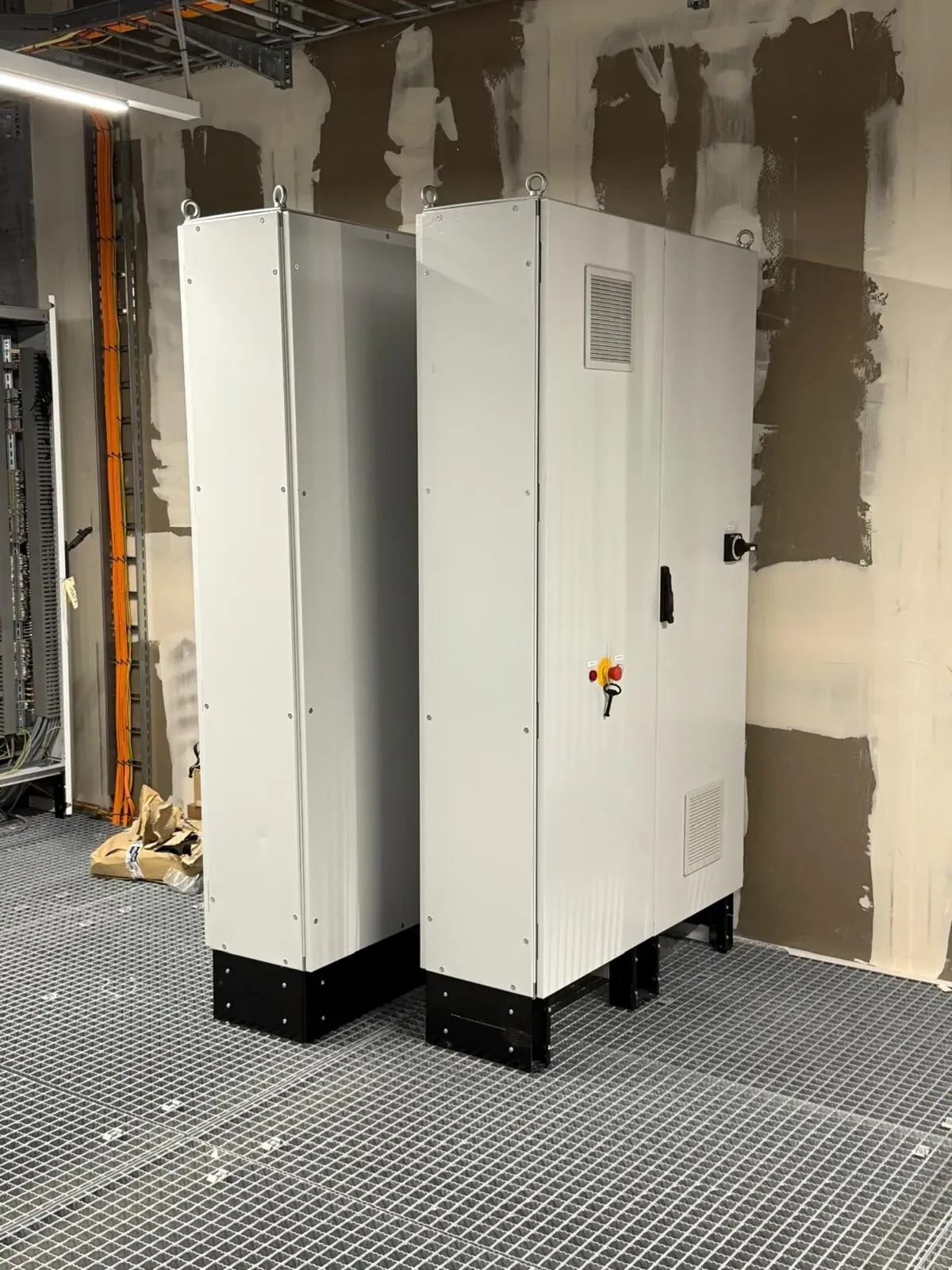
Drives, cables, and controls should be physically separated from the product zone. Where drives must be in the wet zone: stainless steel, IP69K.
10. Traceability and documentation
All materials must be documented: material certificates for stainless steel, EU declarations for plastics, FDA certificates for seals.
Practical example: retrofitting an existing conveyor
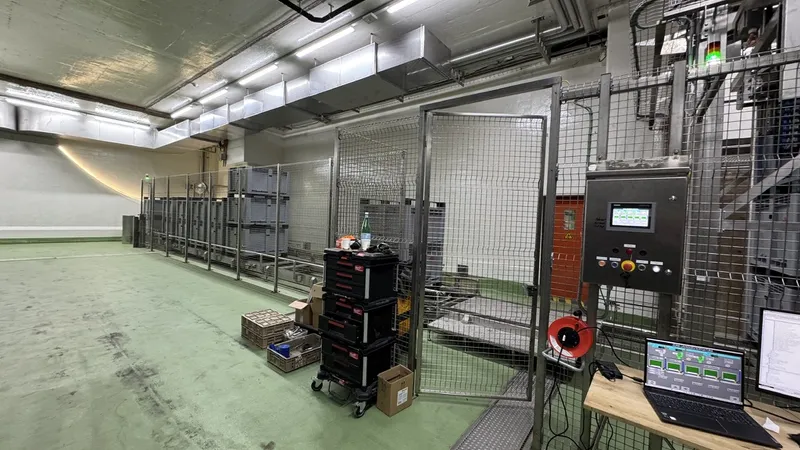
A typical VLD Service project: a Swiss meat processor had recurring contamination problems on a conveyor: despite daily cleaning.
Problem 1: Frame made of closed square hollow sections. Standing water inside. Solution: Frame replaced with open C-profiles in 316L stainless steel.
Problem 2: Belt guides with threaded adjustment screws. Biofilm in the threads. Solution: Threaded joints replaced with welded stainless steel brackets with eccentric adjustment.
Problem 3: Standard PG cable glands. Leaking after 6 months. Solution: Hygienic design cable entries with stainless steel cap nut and FDA-compliant seal.
Result: Contamination reduced to zero. Cleaning time reduced by 20%.
Costs and benefits
Hygienic plant construction costs more than standard: typically 15–30% premium. In return:
- Lower cleaning costs: Less labour, less detergent, less water
- Fewer complaints: No contamination = no product recalls
- Higher availability: Less corrosion damage, fewer seal replacements
- Audit confidence: Pass IFS/BRC audits without findings
Our services
VLD Service supports Swiss food plants with hygienic plant construction:
- Assessment: Check existing plants against hygienic design principles
- Retrofit: Identify and rebuild critical points
- Installation: Complete plants according to Hygienic Design principles
- Training: Your technicians in hygienic engineering practices
Need a hygienic design assessment for your plant? Contact VLD Service: +41 32 552 28 88 or info@vldservice.ch.
Our services for food production companies: mechanical, electrical and automation from one provider.
For machinery manufacturers: If you sell machines into Switzerland and need a local installation and service partner: subcontracting or full Swiss service partnership.
Related articles
- Production Downtime in Food Industry: Immediate Actions
- Commissioning Industrial Plants in Switzerland
- Stainless Steel Welding for the Food Industry
- Electrical Panels for the Food Industry
- Machinery installation, repair & maintenance: our service
- Industrial machine repair in Switzerland: troubleshooting at the line