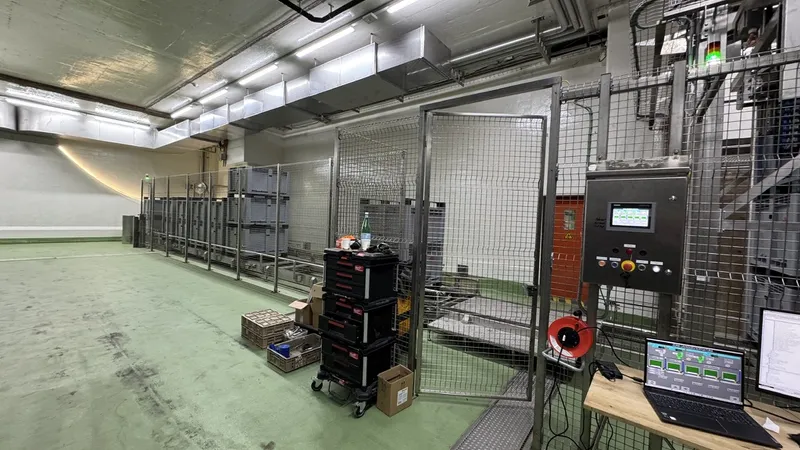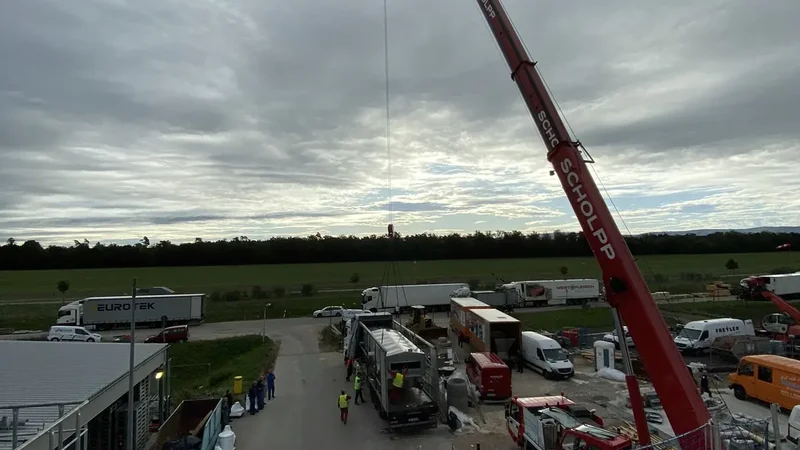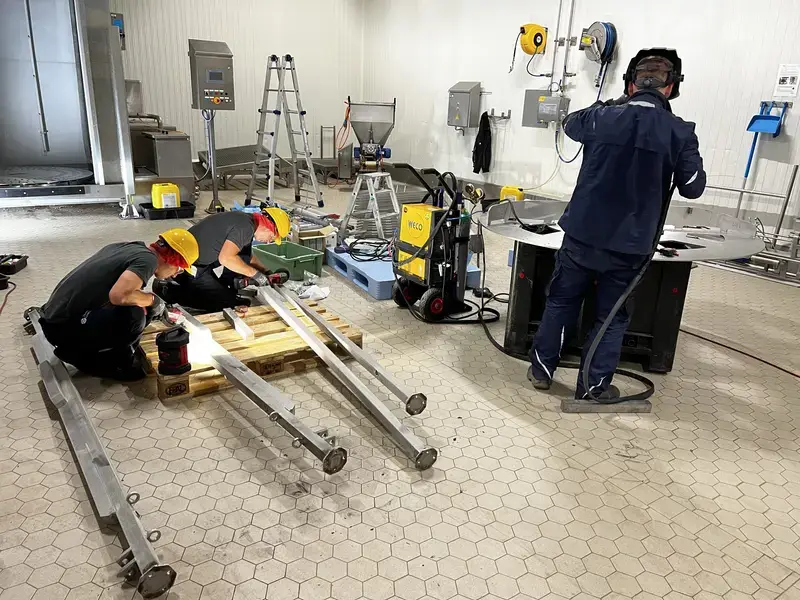
International machinery manufacturers know this situation: you sell a machine to a Swiss customer, the machine is delivered on schedule, but then the hard part begins. Who installs it? Who commissions it? Who trains the operators? Who responds if something breaks six months later?
Building your own service team in Switzerland is expensive, time-consuming, and rarely justified for the volume of installations per year. The alternative — sending technicians from Germany, Italy, or the Netherlands for every intervention — adds cost, delays response times, and frustrates customers.
The practical solution is a local installation partner. But not every service company is the right fit for a machinery manufacturer.
What “installation partner” actually means in practice
The term gets used loosely. In practice, a genuine installation partner for a machinery manufacturer needs to do at least four things well:
1. Install according to your documentation — not improvised, not adapted. The machine must be assembled to your specifications, tolerances, and alignment requirements. This demands discipline and experience, not just general mechanical ability.
2. Commission correctly — electrical connection, PLC parameterization, sensor calibration, safety circuit testing, test runs. If the partner is only mechanical, you still need a second company for the electrical and automation work. That is a coordination problem you do not want.
3. Train the customer’s staff — in their language. In Switzerland, this means German, French, or Italian depending on the region. A partner who can only communicate in English or relies on machine translation creates frustration during training and undermines the commissioning handover.
4. Stay available after commissioning — for troubleshooting calls, maintenance visits, minor adjustments. After-sales support is where customer satisfaction is built or lost. A partner who is “available in principle but books up fast” is not a real after-sales solution.
The brand-independent factor
A critical criterion that is often overlooked: your installation partner must be manufacturer-independent.
This matters because your Swiss customers have mixed equipment. They have your machines alongside those from five other manufacturers. A service partner tied to a competing OEM creates an immediate conflict of interest. You want a partner who works on your machines — and only helps maintain everything else because it is part of good on-site service practice, not because they represent another brand.
VLD Service is brand-independent by structure. We have no exclusive agreements with any machine manufacturer. We install, commission, and service the machines our clients specify — nothing more, nothing less.
The food industry dimension
If your machines go into food processing — meat, dairy, convenience food, beverages, bakeries — the technical requirements are specific:
Hygienic installation: Stainless steel, weld seams executed to hygienic design principles, no dead zones, cleanable surfaces. A general industrial mechanic who has never worked in a food-grade environment will make mistakes that create hygiene problems later.
HACCP-compatible repair methods: When something breaks on a food production line, the repair itself must not introduce contamination risk. TIG welding on stainless steel without the right technique, wrong surface finish, improper gasket materials — these are real risks in the food sector.
Understanding production schedules: Food production has rigid schedules. Maintenance windows are short, often at night or on weekends. A partner who only works 8-to-5 on weekdays is not a match for this industry.
We have documented over 80 service interventions in Swiss food processing facilities — meat processing, dairy, confectionery, logistics and conveyor systems. This experience directly affects the quality and speed of every installation we perform. (Client references available on request, subject to written consent for disclosure.)
What the right collaboration looks like
The most effective partnerships between machinery manufacturers and local service partners have a few common characteristics:
Clear scope definition upfront — what the partner handles (installation, commissioning, training, after-sales), what remains with the manufacturer (remote support, software updates, spare parts supply).
Technical documentation transfer — assembly drawings, wiring diagrams, PLC documentation, calibration procedures. The partner cannot install well without proper documentation.
A defined contact on both sides — one person at the manufacturer who answers technical questions, one person at the partner who manages the job on-site. Too many handoffs create miscommunication.
Transparent reporting after each job — what was installed, what was commissioned, any deviations from specification, any open items. This documentation matters for warranty management and future service.
Escalation path — for situations where the partner encounters something outside the agreed scope. This needs to be defined in advance, not improvised during a commissioning delay.
Practical criteria for evaluating a partner
When evaluating a Swiss installation partner, we suggest looking at these concrete factors:
| Criterion | What to ask |
|---|---|
| Technical breadth | Can they handle mechanics, electrical, and automation in-house? |
| Food industry experience | What specific food processing references do they have? |
| Language capability | Which Swiss national languages can they work in? |
| Response time | What is the typical response time for an urgent service call? |
| Documentation standard | Do they deliver installation and commissioning reports? |
| Reference availability | Can they connect you with existing customers who can speak to their quality? |
| Contractual flexibility | Can they work under your brand if needed? On a frame agreement? |
A note on scale
Swiss machinery installations typically occur 2–15 times per year for manufacturers with moderate Swiss market share. That is not enough volume to justify a full-time employee on Swiss soil. But it is enough volume to justify a structured, documented partnership with a local specialist.
The value is not just in the installation itself. It is in the ongoing relationship: your Swiss customer knows there is a competent local contact. Your machine has a service history with a partner who knows it. Problems get resolved quickly, in the local language, without international travel costs.
That is what a real installation partner delivers.
VLD Service GmbH is a Swiss technical company specializing in installation, commissioning, and after-sales service for industrial machinery — primarily for the food processing industry. We work with machinery manufacturers as a local Swiss partner. Contact us or read more on our machinery manufacturer partner page.